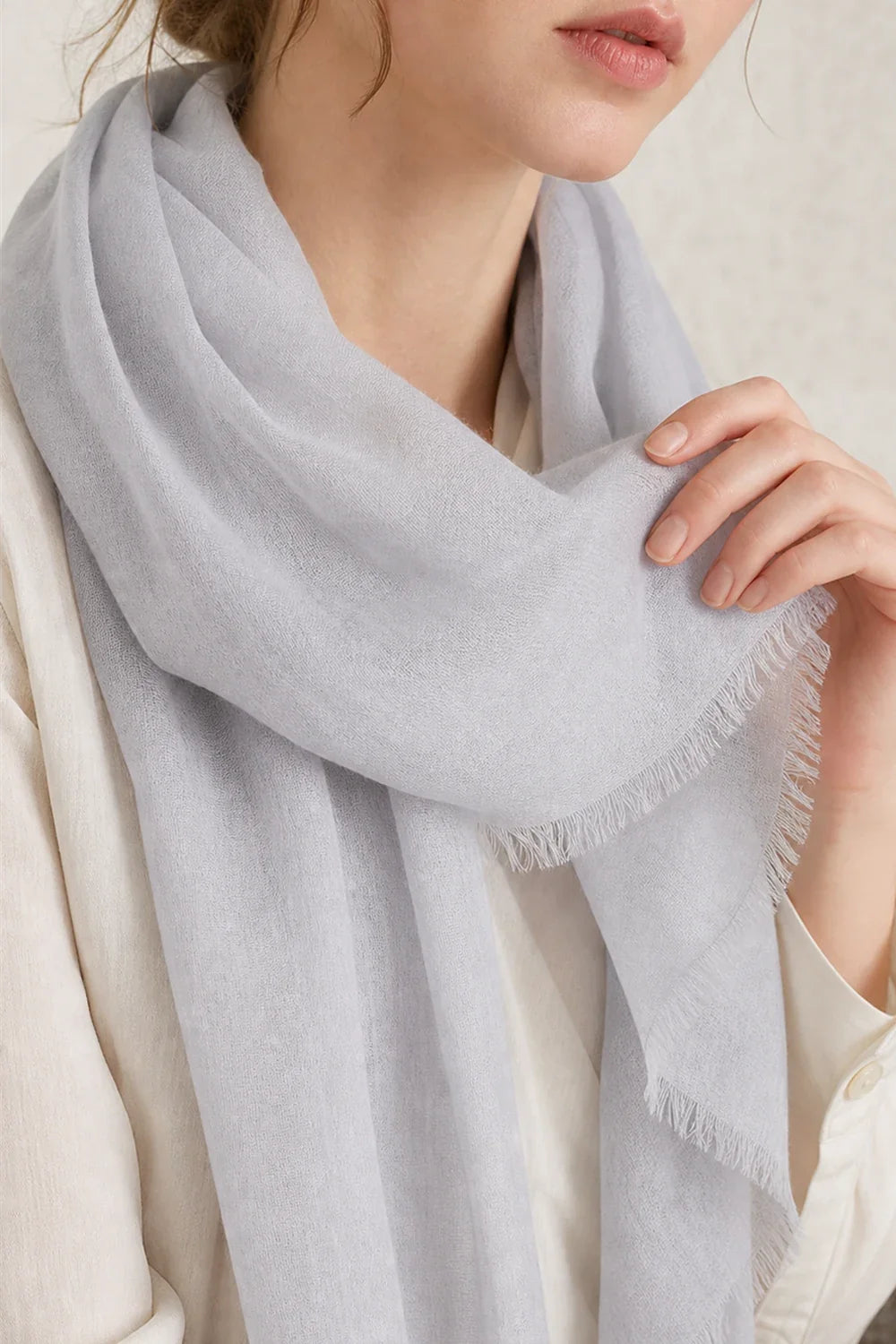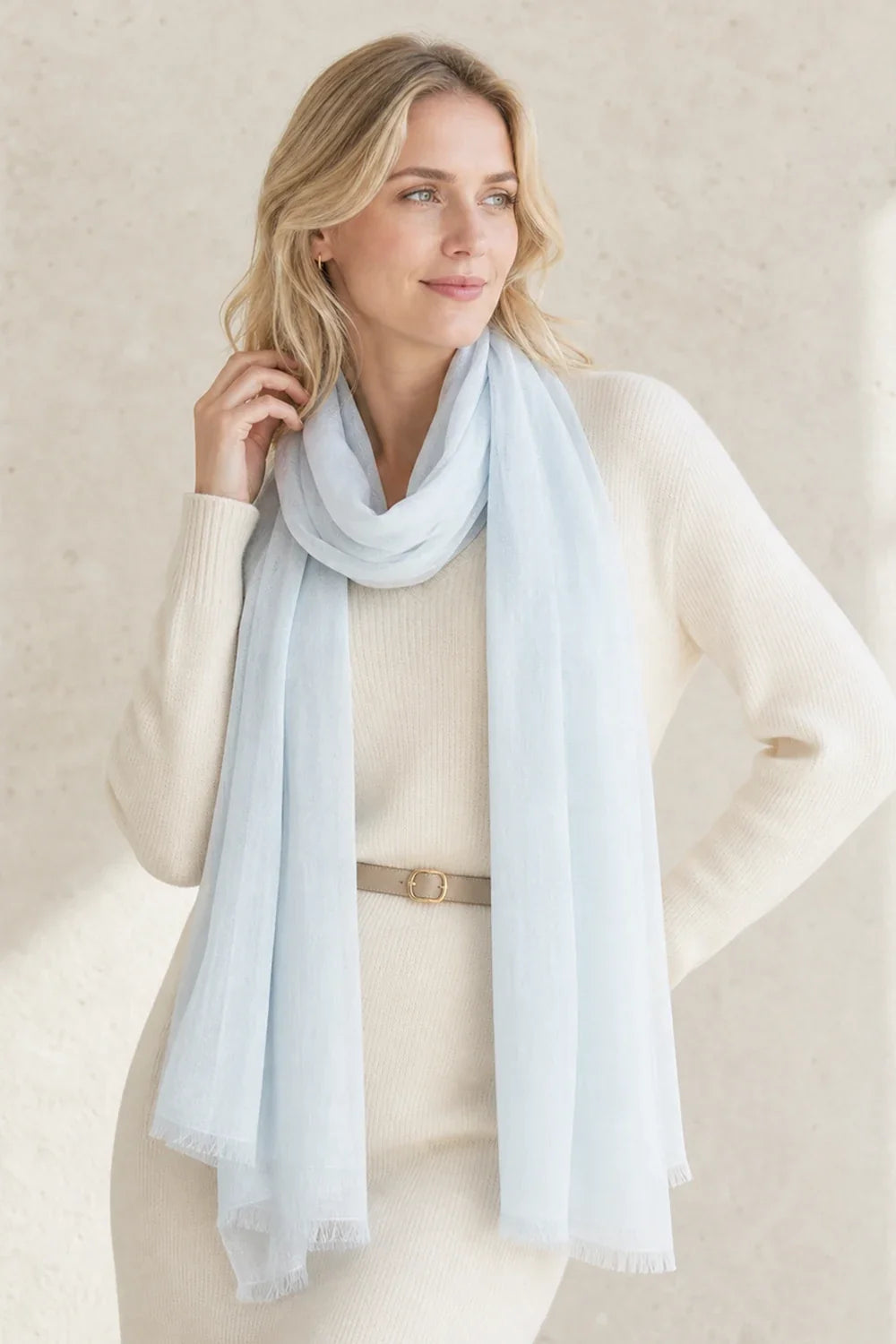

A puffer jacket already brings plenty of shape to an outfit. Add a scarf, and the main question becomes where to put the extra fabric: inside the collar, over the jacket, or loosely across the front.
A 100% cashmere scarf can work with each arrangement. The most comfortable choice depends on the jacket’s neckline, the space around its hood, and how you normally fasten it.
Start with the jacket on. Its collar will tell you more about the right scarf placement than any particular knot.
Check the Collar Before Tying the Scarf
Zip your jacket to the height you usually wear, then notice where the collar sits.
A tall, padded collar may already reach close to your chin. In that case, a large scarf loop placed inside it can make the neckline feel crowded. Try a flat arrangement with the scarf ends tucked down the chest, provided the collar still closes comfortably.
A lower collar leaves more room for a loose loop. You can wear the scarf around your neck and allow the jacket to close beneath it.
If the jacket has a wide, open neckline, a single wrap with the ends hanging down the front may be enough. Adjust the jacket first, then arrange the scarf around the space that remains.
Wearing the Scarf Inside the Jacket
An inside tuck is useful when you want the scarf to stay close to your body and leave the outside of the jacket relatively simple.
Place the scarf behind your neck with both ends hanging down the front. Cross the ends loosely over your upper chest, then close the jacket over them. There is no need to tie a knot if the jacket holds the scarf comfortably in place.
Keep the fabric flat beneath the zipper. If the scarf bunches under your chin, open the jacket and smooth it down rather than tightening it around your neck.
This arrangement is worth trying with an Audingull 100% cashmere scarf when you prefer a small amount of color visible above the jacket. It also keeps long ends contained during a walk or commute.
An inside tuck depends on having enough room. If closing the jacket compresses the scarf uncomfortably, use an outside drape instead.
Wearing the Scarf Outside the Jacket
An outside arrangement leaves the scarf more visible and gives you room to adjust it without reopening the jacket.
For a lower collar, place the scarf around your neck with one end longer than the other. Bring the longer end around once, then let both ends fall down the front. Keep the loop loose enough to turn your head comfortably.
With a high collar, you may prefer to drape the scarf around the outside of the raised collar without adding another wrap. Let the jacket support the shape.
Pay attention to the front of the outfit. If the scarf already forms a substantial loop, leave the ends loose. Adding a large knot underneath can create more volume in one small area.
Make Room for the Hood
A hood changes how the back of a scarf sits. Fabric gathered at the nape of your neck can push against the hood or make it awkward to pull up.
After arranging the scarf, raise the hood once. Turn your head gently to each side and check that neither piece pulls against the other.
If the fit feels restricted, unfold the scarf slightly at the back and move more of its fabric toward the front. A flatter section behind the neck is often easier to accommodate than a thick roll.
Also check the scarf when the hood is down. The hood should rest naturally rather than trapping a large knot beneath it. Keep scarf ends clear of toggles, snaps, and zipper teeth when adjusting either piece.
Balance the Scarf With the Jacket’s Length
A cropped puffer leaves the waist and lower half of the outfit visible. Shorter scarf ends can preserve that proportion, while longer ends create a deliberate contrast.
Try the scarf both ways before deciding. If its ends cover most of the jacket, a loose tuck may make the outfit easier to arrange.
With a longer puffer, a vertical scarf drape can follow the line of the coat. This works well when the scarf is visible down the front rather than gathered entirely at the neckline.
Your plans matter as much as the appearance. Sit down with the jacket and scarf on. Check whether the ends bunch in your lap or catch beneath a bag. A small adjustment before leaving home can make the outfit more comfortable throughout the day.
Use Color and Texture Selectively
The jacket’s surface provides a useful starting point.
With a shiny puffer, a softly textured scarf creates contrast even when the colors are similar. With a matte jacket, a patterned scarf or a distinct color can become the main detail near your face.
For example, a burgundy scarf can add warmth to a gray jacket, while light blue can stand out against navy. A cream scarf with a green puffer creates a softer contrast. These combinations do not require matching gloves, shoes, and bags.
If your jacket already has a strong print or contrasting panels, a solid scarf may be easier to combine with it. Choose one color from the jacket or another shade you regularly wear.
Do a Quick Fit Check
Once the scarf is arranged, move as you normally would:
- Close the zipper without catching the fabric.
- Turn your head in both directions.
- Raise and lower the hood.
- Put on your usual bag.
- Sit down and stand up.
Notice where the scarf shifts. If a bag strap repeatedly pulls one end sideways, move that end inside the jacket or shorten the drape. If the collar presses the knot into your chin, reposition the knot lower or leave the ends untied.
These adjustments are more useful than trying to hold a complicated arrangement perfectly in place.
Frequently Asked Questions
Should a cashmere scarf go inside or outside a puffer jacket?
Either placement can work. An inside tuck keeps the ends contained, while an outside arrangement makes the scarf more visible. Choose according to the space around your collar and how comfortably the jacket closes.
Can I wear a wide cashmere scarf with a hooded puffer?
Yes, although it may need a flatter fold behind the neck. Test the fit with the hood raised before heading out. If there is too much fabric around the collar, a loose front drape may work better than a full wrap.
Do I need to knot the scarf?
Not always. A jacket can hold loosely crossed scarf ends in place, and a single wrap may provide enough security over a lower collar. Use a knot only when it helps the scarf sit comfortably.
What should I do with the scarf when I open the jacket indoors?
Loosen the arrangement and let the ends hang, or remove the scarf if you feel warm. Undo any knot gently before taking it off.
When you next wear your Audingull cashmere scarf with a puffer jacket, begin with the fastening you use most often. Arrange the scarf around that neckline, check the hood, and adjust the ends for your day. The result should feel comfortable while walking, sitting, and carrying your usual bag.