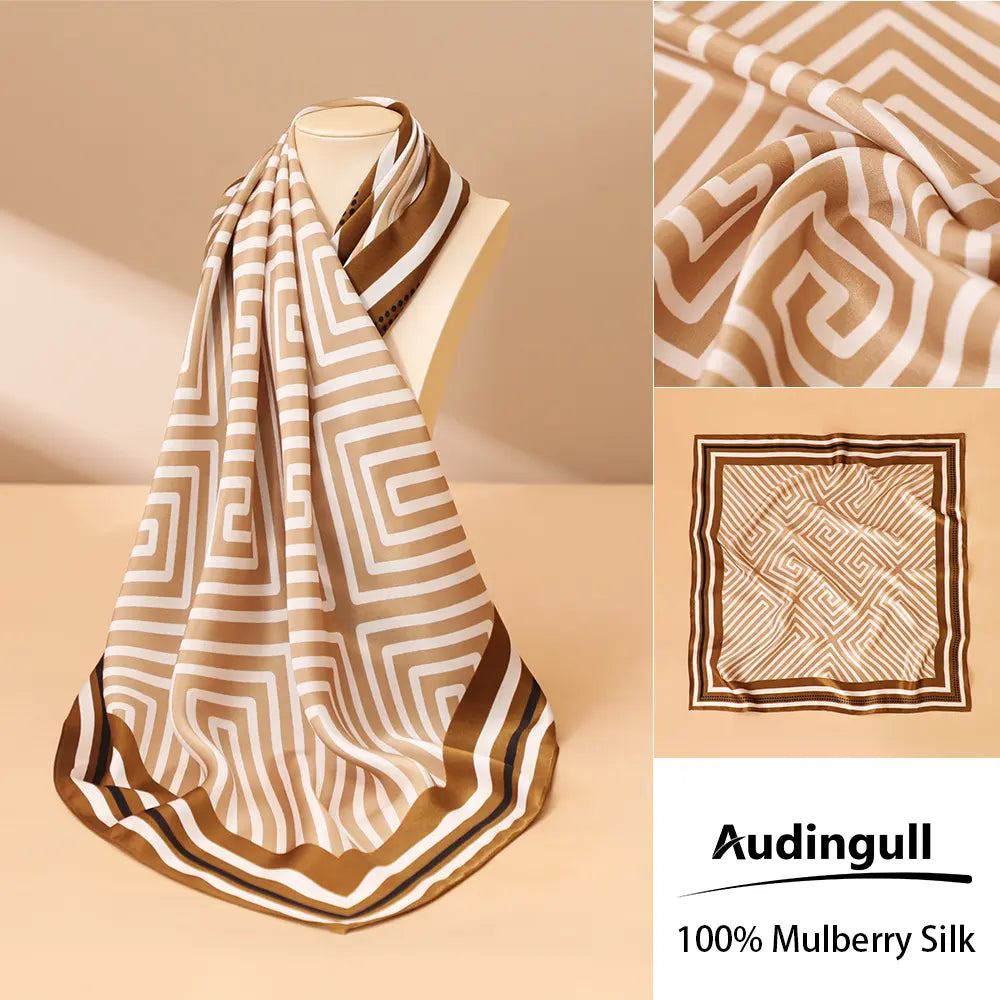

A silk scarf is delicate, but it does not have to feel difficult to care for. With the right method, you can keep your scarf fresh, smooth, and ready to wear without damaging the fabric. The key is to treat silk gently and avoid anything too hot, too harsh, or too rushed.
Whether you wear your scarf around your neck, in your hair, or tied to a handbag, it may come into contact with perfume, sunscreen, makeup, hair products, or everyday dust. Light care between wears can help preserve the softness and natural sheen of the silk.
This guide explains how to wash a silk scarf at home safely, when to choose professional cleaning, and how to dry and store it properly afterward.
Check the Care Label First
Before washing any silk scarf, always read the care label. Some silk scarves can be hand washed, while others may recommend dry cleaning only. The care label should be your first guide because construction, dyes, prints, and finishing details can vary.
If the scarf has hand-rolled edges, delicate prints, embroidery, beadwork, or strong color contrast, be extra careful. These details may need more gentle handling than a plain silk scarf.
When in doubt, choose the safest method. For a valuable or sentimental scarf, professional cleaning may be the better option.
Do a Color Test Before Washing
Silk scarves often have beautiful prints and rich colors, so it is important to test for color bleeding before washing.
Dampen a clean white cloth with cool water. Gently press it against a hidden corner of the scarf or a small area near the edge. Do not rub. If color transfers onto the cloth, avoid washing the scarf at home. In that case, dry cleaning is safer.
If there is no color transfer, you can continue with gentle hand washing.
This small step only takes a moment, but it can help prevent unwanted fading or dye movement.
Spot Clean Small Marks First
If your scarf only has a small mark, you may not need to wash the entire piece.
Use a clean, damp cloth and cool water to gently blot the area. If needed, add a very small amount of mild detergent made for silk or delicate fabrics. Avoid scrubbing, twisting, or rubbing the fibers.
For makeup, oil, or perfume stains, be careful. These marks can become harder to remove if treated too aggressively. If the stain is noticeable or the scarf is expensive, professional cleaning is often the safest choice.
Spot cleaning is useful for small, fresh marks, but it should still be done gently.
Use Cool Water and Mild Detergent
If the care label allows hand washing, fill a clean basin with cool water. Avoid hot water, as heat can affect silk fibers and may cause shrinking, fading, or texture changes.
Add a small amount of mild detergent designed for silk or delicate fabrics. You do not need much. Too much detergent can be difficult to rinse out and may leave the scarf feeling stiff.
Place the scarf in the water and move it gently with your hands. Let it soak briefly, usually for just a few minutes. Do not leave silk soaking for a long time.
The goal is to refresh the scarf, not to treat it like a heavy garment.
Hand Wash With Gentle Movement
When washing a silk scarf, avoid harsh movement. Do not scrub, wring, twist, or stretch the fabric.
Move the scarf slowly through the water. Lightly press the fabric to help the water pass through the fibers. If there is a specific area that needs attention, gently press it between your fingers instead of rubbing it.
Silk is strongest when handled with patience. A calm, gentle wash is usually enough for normal wear.
This method works well for many lightweight silk scarves, including everyday pieces from brands such as Audingull, as long as the care label supports hand washing.
Rinse Carefully
After washing, drain the soapy water and refill the basin with clean cool water. Gently move the scarf through the water to rinse out the detergent.
You may need to change the water once or twice until it runs clear and no soap remains. Detergent left in the fabric can make silk feel dull or slightly stiff.
Be careful when lifting the scarf from the water. Wet silk can feel delicate, so support the fabric with both hands rather than pulling it from one corner.
Do Not Wring the Scarf
After rinsing, do not twist or wring the scarf. Wringing can stretch silk, create deep creases, and damage the fabric’s shape.
Instead, place the scarf flat on a clean white towel. Roll the towel gently with the scarf inside, then press lightly to absorb extra water. Do not squeeze too hard.
Unroll the towel and move the scarf to a dry towel if needed.
This step helps remove water while keeping the scarf’s shape and surface smooth.
Lay Flat to Dry
Silk scarves should usually be dried flat or laid over a clean towel. Keep the scarf away from direct sunlight, heaters, and strong airflow.
Do not use a tumble dryer. Heat can damage silk and may cause the fabric to lose its soft feel.
Smooth the scarf gently with your hands while it is still damp. Make sure the edges are not folded under or stretched out of shape.
Let the scarf dry naturally. Depending on the thickness and room conditions, it may take several hours.
How to Remove Wrinkles From a Silk Scarf
Once the scarf is dry, it may have light wrinkles. There are a few gentle ways to refresh it.
You can hang the scarf in a bathroom while taking a warm shower, allowing light steam to relax the fabric. Make sure the scarf does not get wet.
If the care label allows ironing, use the lowest silk setting and iron from the reverse side. Place a clean cotton cloth between the iron and the scarf. Do not press too hard, and avoid leaving the iron in one place.
A garment steamer can also help, but use it carefully. Keep some distance between the steamer and the scarf, and avoid over-wetting the silk.
What to Avoid When Washing Silk
Silk care becomes much easier when you know what to avoid.
Do not use bleach. It can weaken silk fibers and affect color.
Do not use hot water. Cool water is safer for most silk scarves.
Do not scrub stains aggressively. Rubbing can damage the surface and spread the stain.
Do not wring or twist the scarf. Press out water gently with a towel instead.
Do not dry silk in direct sunlight. Sunlight can fade colors and change the fabric over time.
Do not store the scarf while damp. Always make sure it is completely dry before folding it away.
How Often Should You Wash a Silk Scarf?
A silk scarf does not need to be washed after every wear. Washing too often can put unnecessary stress on delicate fibers.
If the scarf is lightly worn, air it out after use. Place it over a clean chair, towel rack, or hanger for a few hours away from direct sunlight. This helps release light odors and moisture.
Wash the scarf when it has visible marks, noticeable odor, or product buildup from perfume, sunscreen, hair spray, or makeup.
If you wear silk scarves often, rotating between a few pieces can help each one rest between wears.
How to Keep Your Silk Scarf Cleaner for Longer
A few daily habits can reduce how often your scarf needs washing.
Apply perfume, sunscreen, and lotion before putting on your scarf. Let these products dry fully before the silk touches your skin.
Be careful with makeup around the neckline, especially foundation and powder. If you wear a scarf in your hair, avoid placing it directly over wet hair products.
When tying a scarf to a handbag, keep it away from rough metal hardware, zippers, and dirty surfaces.
After wearing, fold the scarf loosely and store it in a clean, dry place. If you have several silk scarves, keep them separated with tissue paper or soft fabric pouches.
When to Choose Professional Cleaning
Home washing is useful, but it is not always the right choice.
Choose professional cleaning if the care label says dry clean only, if the scarf has strong colors that bleed during testing, or if it has delicate details such as embroidery or hand finishing.
Professional cleaning is also a good choice for oil stains, heavy makeup stains, wine, ink, or marks that have already set into the fabric.
It is better to be cautious than to risk permanent damage, especially with a scarf you love or wear often.
Final Thoughts
Washing a silk scarf at home is possible when you use a gentle method. Always start with the care label, test for color transfer, use cool water, choose mild detergent, and avoid twisting or heat. After washing, press out water with a towel and let the scarf dry naturally.
A well-cared-for silk scarf can remain beautiful through many wears. With simple habits and careful handling, your favorite Audingull silk scarf can stay soft, smooth, and easy to style season after season.
FAQ
Can I wash a silk scarf at home?
Yes, if the care label allows hand washing and the colors do not bleed during testing. Use cool water and mild detergent for delicate fabrics.
Can I put a silk scarf in the washing machine?
Hand washing is usually safer. A washing machine can cause friction, twisting, or snagging, even on a delicate cycle.
What detergent should I use for silk?
Use a mild detergent made for silk or delicate fabrics. Avoid bleach, strong stain removers, and regular harsh detergents.
How do I dry a silk scarf after washing?
Place it on a clean towel, roll gently to remove extra water, then lay it flat to air dry away from direct sunlight and heat.
Can I iron a silk scarf?
If the care label allows it, use the lowest silk setting, iron from the reverse side, and place a clean cloth between the iron and the scarf.