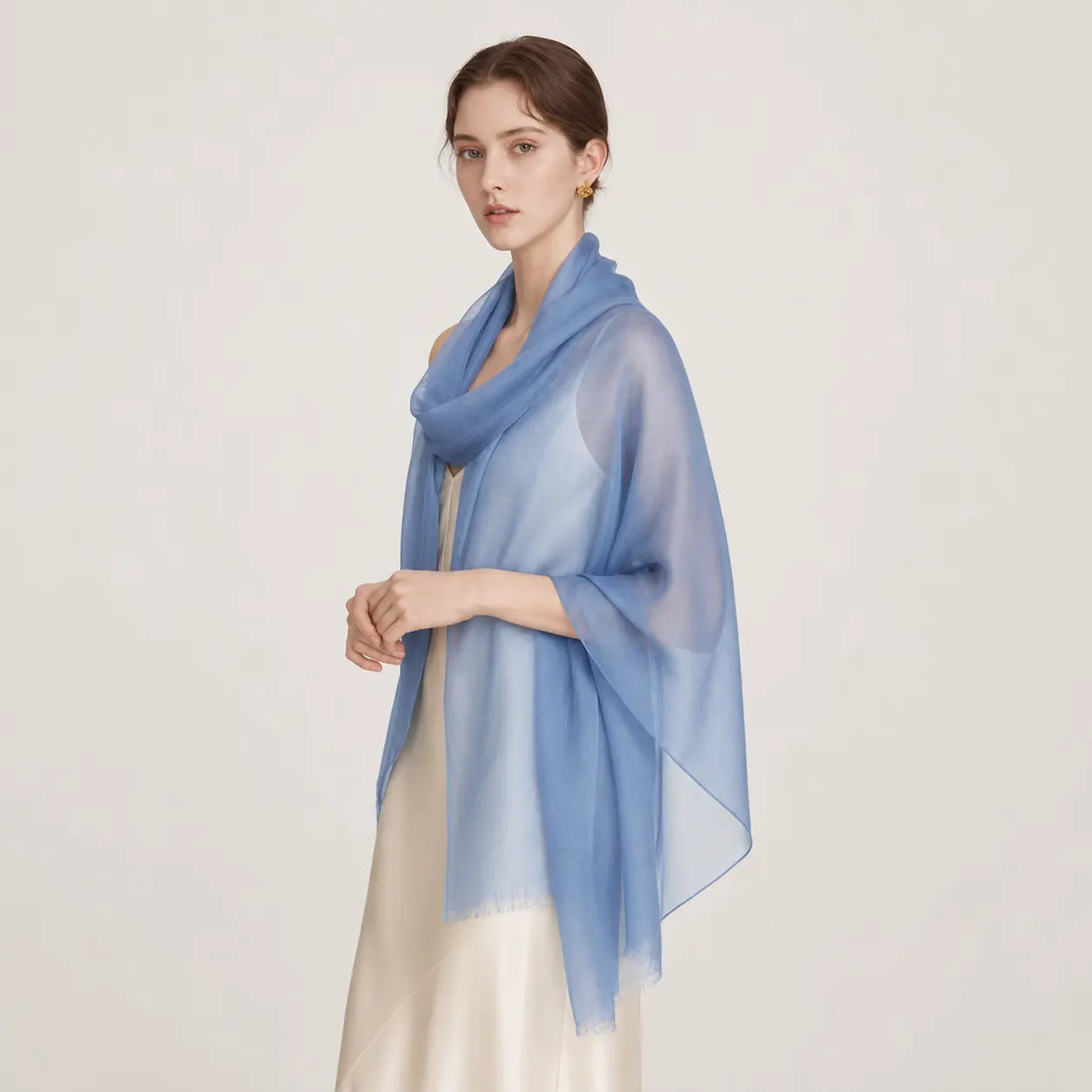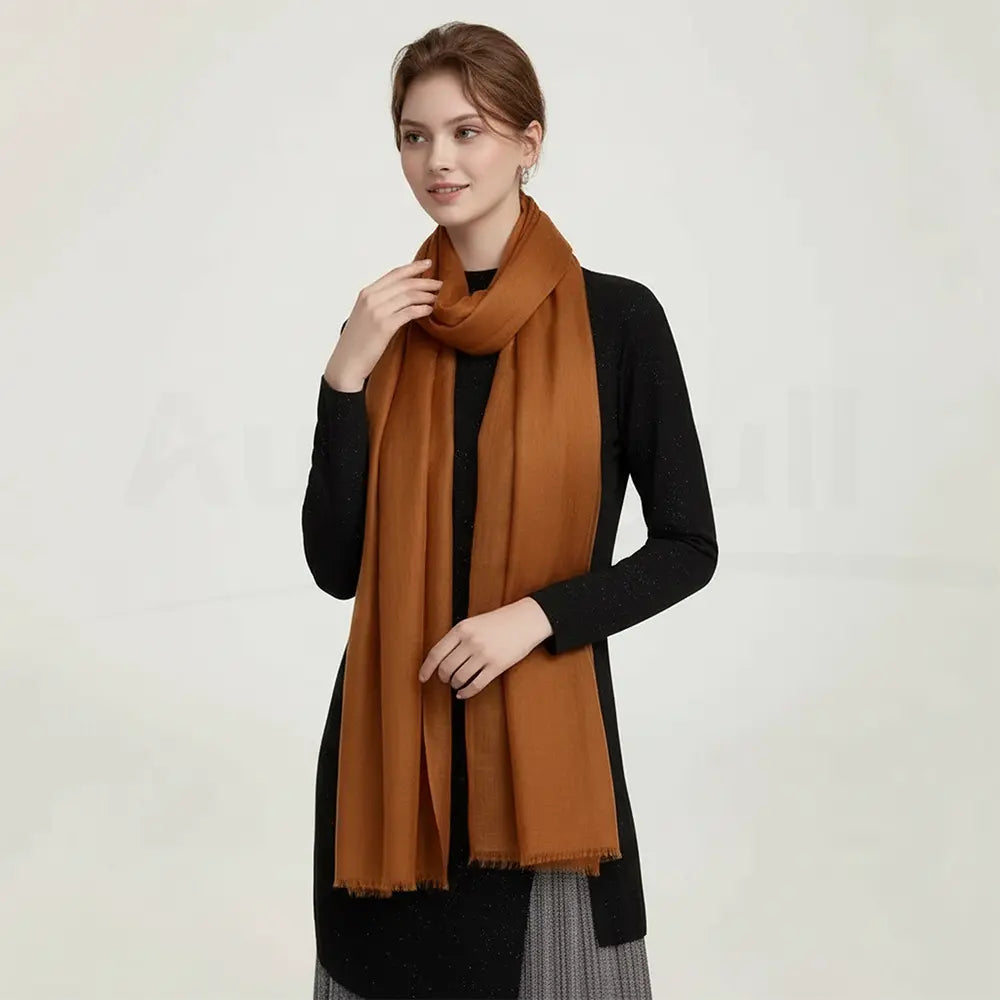

When shopping for a silk scarf, the word “silk” is only the beginning. Two scarves can both be made from silk but feel completely different in your hands, around your neck, and in your wardrobe. One may feel slightly structured with a soft matte shine. Another may feel smooth, fluid, and more glossy.
Two common options are silk twill and silk satin. Both can be beautiful, but they have different textures, drape, shine, and styling uses. Understanding the difference can help you choose a scarf that fits your daily outfits instead of buying only based on color or print.
Here is a simple guide to silk twill vs. silk satin scarves.
What Is Silk Twill?
Silk twill is a silk fabric woven with a subtle diagonal rib pattern. You may notice this texture when you look closely at the surface or feel it gently between your fingers.
Because of this weave, silk twill often has a little more structure than very smooth silk fabrics. It can hold folds and knots well, which makes it popular for square printed scarves.
A silk twill scarf usually feels polished but not overly shiny. It has a refined surface, a soft hand feel, and enough body to sit neatly around the neck or under a blazer.
If you like classic scarf styling, silk twill is often an easy choice.
What Is Silk Satin?
Silk satin is known for its smooth surface and more noticeable sheen. The word “satin” refers to the weave, not the fiber itself. When made from silk, satin has a fluid, glossy appearance and a soft feel against the skin.
A silk satin scarf usually drapes more smoothly than silk twill. It may feel lighter, softer, and more flowing depending on the weight of the fabric.
Because of its shine, silk satin can feel slightly dressier. It works well with evening outfits, simple dresses, soft blouses, and minimal styling where the fabric itself becomes the main detail.
If you prefer a scarf that feels smooth and elegant, silk satin may suit your style.
Texture: Structured vs. Smooth
The biggest difference between silk twill and silk satin is texture.
Silk twill has a fine diagonal texture. This gives it a slightly structured feel and helps it stay in place better when tied. It is still soft, but it does not feel as slippery as satin.
Silk satin has a smoother, more fluid surface. It feels sleek and soft, with a more noticeable shine. Because the surface is smoother, it may slip more easily depending on how it is styled.
If you want a scarf that holds a neck knot neatly, silk twill is often practical. If you want a scarf that falls softly and catches the light, silk satin may be the better choice.
Shine: Subtle vs. Glossy
Both fabrics can look elegant, but the shine is different.
Silk twill usually has a softer sheen. It reflects light in a more understated way, which makes it easy to wear during the day. This is one reason silk twill scarves often feel natural with shirts, sweaters, trench coats, and office outfits.
Silk satin has a stronger shine. It can look more fluid and luminous, especially in solid colors or simple prints. This makes it a good option for evening wear, special occasions, or outfits that are intentionally minimal.
Neither finish is better. The right choice depends on whether you prefer a quiet polish or a smoother, more noticeable glow.
Drape: Which One Falls Better?
Drape refers to how the fabric hangs and moves.
Silk twill has more body, so it tends to hold shape. When folded into a band, it stays defined. When tied at the neck, it creates a clean knot. This makes it useful if you like structured scarf looks.
Silk satin usually has a softer, more liquid drape. It falls closer to the body and can look graceful when loosely tied, draped over the shoulders, or worn with a dress.
For small neck scarves, silk twill often feels easier to control. For long scarves or flowing styles, silk satin can feel especially beautiful.
Which One Is Better for Printed Scarves?
Silk twill is commonly used for printed square scarves because it can show patterns clearly while holding shape. Borders, geometric prints, florals, and illustrated designs often look crisp on silk twill.
Silk satin can also carry prints beautifully, especially when the design benefits from shine and fluid movement. Colors may look rich because of the smooth surface, though the scarf may feel softer and less structured when folded.
If you want a scarf that looks good both flat and tied, silk twill is a reliable option. If you want the print to feel soft, glossy, and graceful, silk satin can be a strong choice.
Which One Is Easier to Style?
For beginners, silk twill is usually easier to style. It has enough texture to hold simple knots and folds, so it is less likely to slide out of place.
You can fold a silk twill scarf into a narrow band, tie it around the neck, tuck it under a blazer, or tie it to a handbag. It usually keeps a neat shape throughout the day.
Silk satin may require a little more attention because it is smoother. It can slip, especially in hair styling or loose knots. However, it looks beautiful when styled simply. A loose drape, soft neck tie, or elegant bag knot can work very well.
If you want low-effort daily wear, choose silk twill. If you enjoy a softer and more fluid look, silk satin is worth considering.
Which One Works Better for Work Outfits?
Silk twill is often the more practical choice for workwear. It feels polished, holds shape, and usually has a more understated shine. It pairs well with button-down shirts, blazers, cardigans, knit tops, and trench coats.
A silk twill scarf can add detail without feeling too dressy. It is especially useful in office wardrobes built around neutrals such as navy, gray, ivory, camel, black, and white.
Silk satin can also work for work outfits if the color and styling are simple. A satin scarf in a muted shade or clean print can look elegant with a blouse, blazer, or dress. For more formal offices, keep the knot simple and avoid overly glossy or bold styling.
Which One Works Better for Casual Outfits?
Both silk twill and silk satin can be styled casually.
Silk twill works well with denim, white shirts, cotton sweaters, trench coats, and relaxed jackets. Its structure helps it feel easy and not too delicate.
Silk satin can soften casual outfits. Try it with a plain T-shirt, simple dress, linen shirt, or lightweight cardigan. Because satin has more shine, it can make a very simple outfit feel more finished.
For casual daily wear, choose colors and prints that do not feel too formal. Soft blue, cream, olive, blush, navy, taupe, and warm neutrals are easy to wear.
Which One Is Better for Hair Styling?
Silk satin is smooth and gentle, which many people like for hair styling. It can feel soft against the hair and create a fluid look when tied around a ponytail or bun.
However, because satin is smooth, it may slip more easily. If you use a silk satin scarf in your hair, tie it over a hair elastic or secure it with a small hidden pin.
Silk twill can stay in place better because it has more texture. It works well as a headband, ponytail tie, or small hair scarf if you want more hold.
If your priority is softness and shine, choose satin. If your priority is staying power, choose twill.
Which One Is Better for Travel?
For travel, silk twill is often easier because it handles folding and tying well. A medium square silk twill scarf can be worn around the neck, tied to a bag, used in the hair, or styled under a blazer.
Silk satin is also travel-friendly because it feels light and elegant. It can dress up a simple outfit quickly, especially for dinners or events. The main thing is to pack it carefully so it does not crease or snag.
If you want one scarf for many uses, silk twill may be the more practical travel choice. If your travel wardrobe includes evening outfits or minimalist dresses, silk satin may feel more natural.
Care Differences Between Silk Twill and Silk Satin
Both silk twill and silk satin need gentle care. Always follow the care label first.
Silk twill may feel a little more structured, but it is still delicate. Avoid harsh rubbing, hot water, bleach, and twisting. Fold it loosely and store it away from rough surfaces.
Silk satin can show water marks, creases, or surface changes more easily because of its smooth finish. Be careful with perfume, makeup, sunscreen, and hair products. Let products dry before wearing the scarf.
For both fabrics, hand washing may be possible only if the care label allows it. When in doubt, professional cleaning is safer.
How to Choose Between Silk Twill and Silk Satin
Choose silk twill if you want a scarf that holds shape, ties easily, works well for printed square scarves, and fits daily styling. It is a good option for workwear, travel, classic outfits, and beginner scarf styling.
Choose silk satin if you want a scarf that feels smooth, glossy, fluid, and slightly dressier. It is a good option for elegant outfits, soft draping, hair styling, evening wear, and minimal wardrobes.
If you are buying your first silk scarf, silk twill may be easier to wear often. If you already own a structured scarf and want something softer, silk satin can add variety.
Audingull silk scarves can be selected based on how you plan to wear them: structured knots and everyday styling, or softer drapes and a more fluid look.
Simple Outfit Ideas
Wear a silk twill scarf with a white button-down shirt, straight-leg jeans, and loafers for a clean everyday outfit.
Tie a silk twill scarf under a navy blazer with a cream blouse and tailored trousers for work.
Wear a silk satin scarf with a simple black dress and low heels for dinner.
Tie a silk satin scarf around a low ponytail with a linen shirt and wide-leg pants for summer.
Add either fabric to a neutral handbag when you want color without wearing the scarf around your neck.
These ideas are simple, but they help each fabric show its strengths.
Final Thoughts
Silk twill and silk satin are both beautiful, but they serve slightly different purposes. Silk twill has more texture and structure, making it easy to fold, tie, and wear throughout the day. Silk satin is smoother and glossier, giving outfits a softer and more fluid finish.
The best choice depends on your wardrobe and habits. If you want a practical everyday scarf, silk twill is a strong place to start. If you want a smoother scarf for elegant styling, silk satin may be the better fit. Both can become useful pieces when the size, color, and styling match your real life.
A well-chosen Audingull silk scarf should not sit untouched in a drawer. It should be easy to reach for, simple to style, and comfortable enough to wear often.
FAQ
Is silk twill real silk?
Yes. Silk twill is real silk woven in a twill structure, which creates a subtle diagonal texture.
Is silk satin the same as silk?
Silk satin is silk woven in a satin weave. Satin describes the weave, while silk describes the fiber.
Which is better for a scarf, silk twill or silk satin?
Silk twill is often better for structured knots and everyday styling. Silk satin is better for smooth drape, shine, and softer looks.
Does silk satin slip more than silk twill?
Yes, silk satin can slip more easily because it has a smoother surface. Silk twill usually has more grip.
Which silk scarf is best for beginners?
A medium square silk twill scarf is often easiest for beginners because it holds folds and knots well.