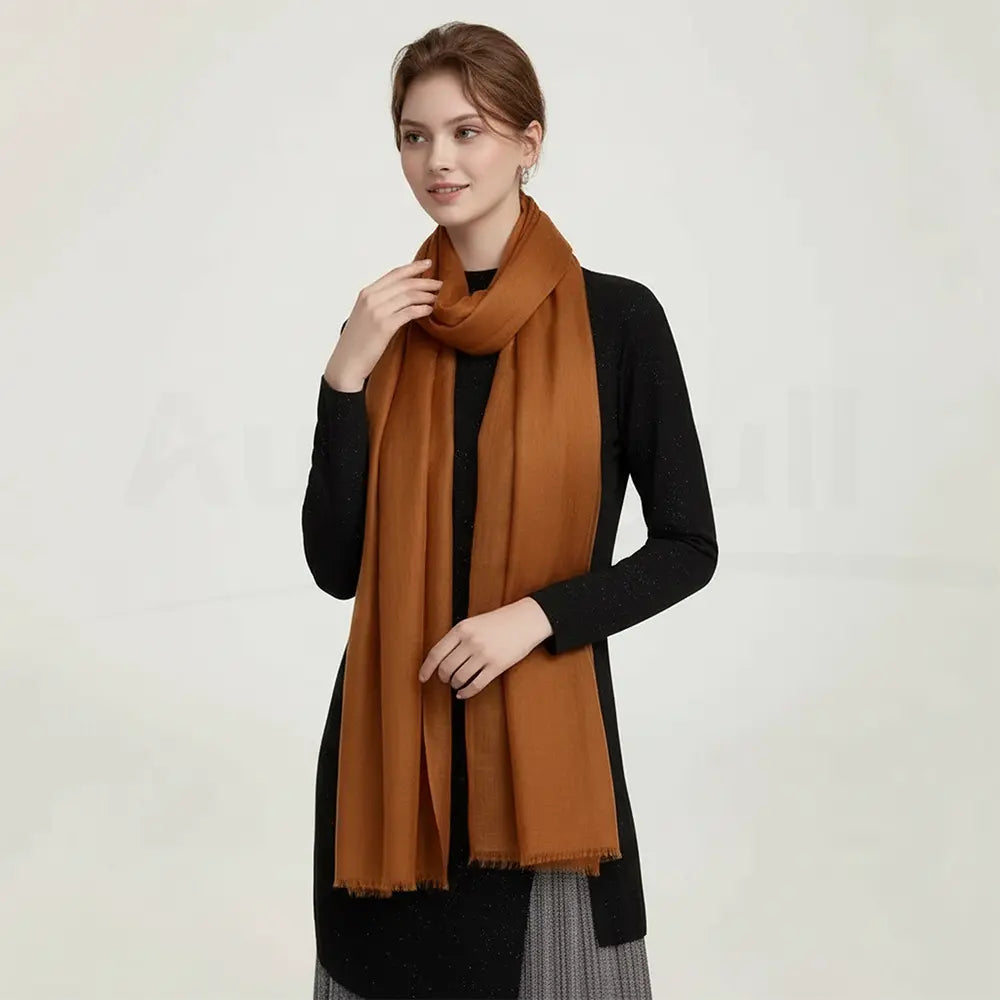

A silk scarf feels smooth and beautiful against the skin, but that same smoothness can sometimes make it slip. It may loosen around your neck, slide out of your hair, or shift during the day when tied to a bag or draped over your shoulders.
This does not mean silk is impractical. It simply means the scarf needs the right fold, knot, placement, and support. Once you know a few simple techniques, a silk scarf becomes much easier to wear in daily life.
Here is how to keep a silk scarf from slipping while still letting it look natural and elegant.
Choose the Right Scarf Size
The size of your scarf affects how securely it stays in place.
A small square silk scarf is easy to tie close to the neck, around a ponytail, or onto a handbag. Because there is less fabric, it is less likely to shift dramatically.
A medium square scarf gives more styling options, but it may need a firmer fold or slightly more secure knot. This size works well for neck styling, headbands, and bag accents.
A large silk scarf can look beautiful, but it may slip more if it is simply draped without support. For larger scarves, use a knot, tuck, scarf ring, or clothing layer to help hold the fabric.
If slipping is a concern, start with a small or medium silk scarf. It is easier to manage and more comfortable for everyday wear.
Fold the Scarf Properly
A good fold creates structure. When a silk scarf is folded too loosely, it can move around more easily.
For neck styling, fold a square scarf into a triangle first. Then continue folding from the pointed end toward the long edge until you have a narrow band. This creates a flatter shape that sits more securely around the neck.
For hair styling, fold the scarf into a long band with even width. A scarf that is too wide may slide, while a scarf folded too thin may feel tight or roll out of place.
For bag styling, fold the scarf neatly before tying it. A clean fold helps the knot sit better and reduces twisting.
Taking a few extra seconds to fold the scarf evenly can make a noticeable difference.
Use a Simple Secure Knot
Some scarf knots look pretty but loosen quickly. For daily wear, choose a knot that is simple and stable.
A small double knot works well for neck scarves and bag scarves. Tie the scarf once, then tie it again gently. Do not pull too tightly, especially with delicate silk, but make sure the knot is firm enough to hold.
A side knot can also stay in place well because it sits against the natural curve of the neck. This works nicely with button-down shirts, sweaters, and dresses.
For a softer look, tie the scarf once and tuck the ends under a collar, blazer, or coat. The clothing helps hold the scarf without needing a tight knot.
Try a Scarf Ring
A scarf ring is a useful tool if you want to avoid tying tight knots. It helps hold the scarf in place while keeping the fabric smooth.
To use one, fold the scarf into a band, place it around your neck, then pull both ends through the ring. Adjust the ring to the height you like. This works especially well with medium square scarves and lightweight long scarves.
A scarf ring can also reduce creasing because the scarf does not need to be knotted as firmly. If you wear silk scarves often, it can be a practical accessory to keep nearby.
Choose a smooth scarf ring with no sharp edges so it does not snag the fabric.
Place the Scarf Under a Collar
One of the easiest ways to keep a silk scarf from slipping is to wear it under a collar.
Try this with a button-down shirt, denim jacket, trench coat, blazer, or lightweight coat. Tie the scarf at the neck, then let the collar hold part of the fabric in place.
This method works well for office outfits and travel days because it keeps the scarf secure without making the knot look too tight.
A silk scarf under a collar also feels polished but not complicated. It is a good everyday styling method if you want the scarf to stay put while you move around.
Tuck the Ends Into Clothing
If the scarf ends keep moving, tuck them into your top, sweater, blazer, or coat.
For example, tie a silk scarf loosely around your neck, then tuck the ends under a crewneck sweater or inside a blazer. This keeps the scarf from sliding forward or shifting to one side.
With a V-neck sweater, you can fold the scarf into a triangle and tuck the ends inside the neckline. With a coat, let the scarf sit under the lapels so only part of the print shows.
This method is useful when you want a clean, controlled look without using pins or accessories.
Use Hair Texture for Better Hold
Silk scarves can slip in hair, especially if the hair is very smooth or freshly washed. A little texture helps the scarf stay in place.
If you are tying a silk scarf around a ponytail, secure the ponytail first with a hair elastic. Then tie the scarf over the elastic. This gives the scarf something to grip.
For a headband style, place the scarf slightly behind the hairline instead of directly on very smooth hair. You can also use a small hidden hairpin behind the ear or at the nape of the neck.
For buns, tie the scarf around the base of the bun rather than over loose hair. The shape of the bun helps keep it secure.
An Audingull silk scarf can work beautifully as a hair accessory, but like any silk scarf, it stays best when tied over a stable base.
Avoid Very Loose Hair Knots
A loose silk scarf in the hair may look effortless at first, but it can slide quickly. If you want the style to last, the first knot should be secure.
Tie the scarf once firmly, then tie it again more gently. This keeps the scarf in place without making the finished look too tight.
If the scarf has long ends, let them fall naturally after securing the base. The visible part can still look relaxed even if the knot underneath is stable.
For outdoor days, travel, or windy weather, use a hair elastic and one small pin for extra support.
Be Careful With Smooth Fabrics
Silk can slip more when worn over other smooth fabrics, such as satin, polished polyester, or very fine knits.
If you want to wear a silk scarf with a smooth blouse, try tying it closer to the neck or placing it under a blazer. If you drape it loosely over a satin dress, it may need a scarf ring or small hidden pin to stay in place.
Silk usually holds better against cotton, wool, denim, cashmere, linen, and textured knits. These fabrics give the scarf more grip.
This does not mean you cannot wear silk with silk or satin. It just means you may need a more secure styling method.
Use a Small Hidden Pin Carefully
A small pin can help keep a silk scarf in place, but it must be used carefully. Silk is delicate, and sharp pins can leave marks or damage the fabric.
If you use a pin, place it through a fold or hidden area rather than the most visible part of the scarf. Choose a fine, smooth pin and avoid pulling the fabric tightly.
For valuable scarves, avoid pins unless necessary. A scarf ring, collar, knot, or tuck is usually safer.
If you do use a pin, remove it gently after wearing and check that it has not snagged the fabric.
Keep Bag Knots Secure
When tying a silk scarf to a bag, slipping often happens because the knot is too loose or the handle is too smooth.
Use a small double knot around the handle. Make sure the scarf is tied where it will not rub constantly against zippers, metal hardware, or rough edges.
If you wrap the scarf around the handle, start with one secure knot, wrap evenly, then finish with another knot. Keep the wrap smooth but not too tight.
A scarf tied to a bag should look relaxed, but it still needs a firm base. Otherwise, it may loosen as the bag moves during the day.
Choose the Right Styling Method for the Day
Different days need different scarf styling.
For work, a scarf under a collar or blazer usually stays secure and looks polished.
For travel, a knot at the neck or a scarf tied to a bag is practical and easy to adjust.
For warm weather, a hair scarf tied over an elastic can be more comfortable than wearing the scarf around your neck.
For dinner, a scarf ring or soft side knot can keep the scarf in place while still looking elegant.
The best method is the one that fits your outfit and your routine.
Avoid Over-Adjusting
It is tempting to keep pulling or fixing a silk scarf, but too much adjusting can loosen the knot and crease the fabric.
Once you tie the scarf, check that it feels comfortable and secure. Then let it sit naturally. A silk scarf does not need to look perfectly symmetrical all day.
Small shifts are normal. In fact, a slightly relaxed scarf often looks more natural than one that is overly controlled.
Good styling should feel easy, not fragile.
Care Helps the Scarf Hold Shape
A silk scarf that is stored well is easier to style. If it is deeply creased, twisted, or wrinkled, it may not fold smoothly or stay where you place it.
Fold silk scarves loosely after wearing. Keep them away from rough surfaces, zippers, and jewelry. If the scarf has wrinkles, use gentle steam or follow the care label for ironing instructions.
Do not store a silk scarf tied in a knot. Knots can create deep creases and weaken the fabric over time.
A smooth, well-cared-for scarf will fold better and hold styling more naturally.
Simple Anti-Slip Styling Formula
If your silk scarf keeps slipping, try this simple formula:
Choose a small or medium scarf.
Fold it into an even band.
Tie a small double knot or use a scarf ring.
Place it under a collar, blazer, or textured layer when possible.
For hair, tie it over an elastic or secure it with a hidden pin.
This approach works for most everyday silk scarf outfits and keeps the styling simple.
Final Thoughts
Silk scarves slip because silk is naturally smooth, but the problem is easy to manage. The right size, fold, knot, and placement can help the scarf stay secure without making it look stiff.
Use collars, blazers, scarf rings, hair elastics, and gentle tucks when needed. Avoid overly loose knots, rough pins, and slippery fabric combinations if you want the scarf to stay in place longer.
A thoughtfully styled Audingull silk scarf should feel comfortable enough for real life: workdays, travel, dinners, casual weekends, and small daily moments when a simple outfit needs one polished detail.
FAQ
Why does my silk scarf keep slipping?
Silk has a naturally smooth surface, so it can slide more easily than textured fabrics. A secure fold, knot, scarf ring, or clothing layer can help keep it in place.
How do I keep a silk scarf in my hair?
Tie it over a hair elastic, bun, or braid. You can also use a small hidden pin for extra hold.
Can I use a pin on a silk scarf?
You can, but be careful. Use a fine, smooth pin in a hidden fold and avoid pulling the fabric tightly.
What knot keeps a silk scarf secure?
A small double knot is usually simple and reliable. A scarf ring can also hold the scarf without tying a tight knot.
Does silk twill slip less than silk satin?
Usually, yes. Silk twill has slightly more texture, while silk satin is smoother and may slip more easily.